
The last (Irish) viceroy of New Spain
In 1808, when French forces invaded Spain, King Charles IV abdicated in favour of his son Ferdinand, el deseado (the desired one); later, he tried unsuccessfully to regain his throne. Napoleon summoned father and son to Bayonne, forced both to renounce the Spanish crown, and installed his brother Joseph as king.
The Spanish people were unhappy with these goings-on. Throughout the country, councils (juntas) were formed in opposition to the French. Eventually a cortes (an assembly) was convened at Cádiz (this produced the liberal Spanish Constitution of 1812).
Involved in Spanish resistance at this time was Juan O’Donojú. Juan was born in Seville on 30 July 1762, son of Richard Dunphy O’Donoghue, from Glenfesk, County Kerry, and Alice Ryan of Inch, County Tipperary (their families had fled Ireland in the 1720s).
At 19, Juan joined the Ultonia (Ulster) Regiment (the various Irish regiments that had existed for years in the Spanish army were eventually reduced to three: Irlanda, Hibernia and Ultonia; they were disbanded in 1818).
He was involved in various actions during the Napoleonic Wars before being taken prisoner by the French and held at Bayonne. He escaped with fellow officers and reached Cádiz, where, later, he served as minister for war.
In 1814, with French control on the peninsula coming to an end, Ferdinand VII was restored to the Spanish throne; he proceeded to nullify the liberal Constitution enacted two years earlier. O’Donojú, a liberal and a freemason, was imprisoned for four years on the island of Mallorca.
An uprising in 1820 forced Ferdinand to reinstate the Constitution (temporarily, as it turned out), and the new government appointed O’Donojú jefe político superior (supreme political head) of the Viceroyalty of New Spain – in effect, the viceroy. He arrived at Veracruz, Mexico, in July 1821, ‘his mission to reform the institutions in Mexico on a liberal footing’[1].
In Mexico, the upheaval of the Napoleonic Wars in Europe had set off a series of revolts. On September 16, 1810 (celebrated as the country’s Independence Day), Miguel Hidalgo, a parish priest in Dolores, northwest of Mexico City, issued the ‘Grito de Dolores’ (‘Cry of Dolores’), calling for ‘the end of rule by Spanish peninsulars, for equality of races, and for redistribution of land’[2]. Hidalgo was executed, as was his successor, another priest, José María Morelos. For the remainder of the decade, a dwindling revolt was continued under Guadalupe Victoria and Vicente Guerrero.
During this period, royalist officer Agustín de Iturbide had opposed the rebels. With the return of liberal rule in Spain, however, he and fellow conservatives now considered that the privileges they enjoyed could best be maintained in a self-governing state. With Guerrero, Iturbide issued the Plan of Iguala, or the Plan of the Three Guarantees: an independent Mexico under a constitutional monarchy, Catholicism as only official religion, equal rights for Spaniards and criollos (criollo/a – a Spaniard born in the colonies). By the time O’Donojú arrived in Mexico, the Army of the Three Guarantees controlled most of the country.
O’Donojú met with Iturbide and on August 24, 1821, they signed the Treaty of Córdoba, by which the jefe político superior agreed to the plan. On September 27, to general acclaim, 16,000 soldiers of the Army of the Three Guarantees marched through the streets of Mexico City. Independence was declared the next day.
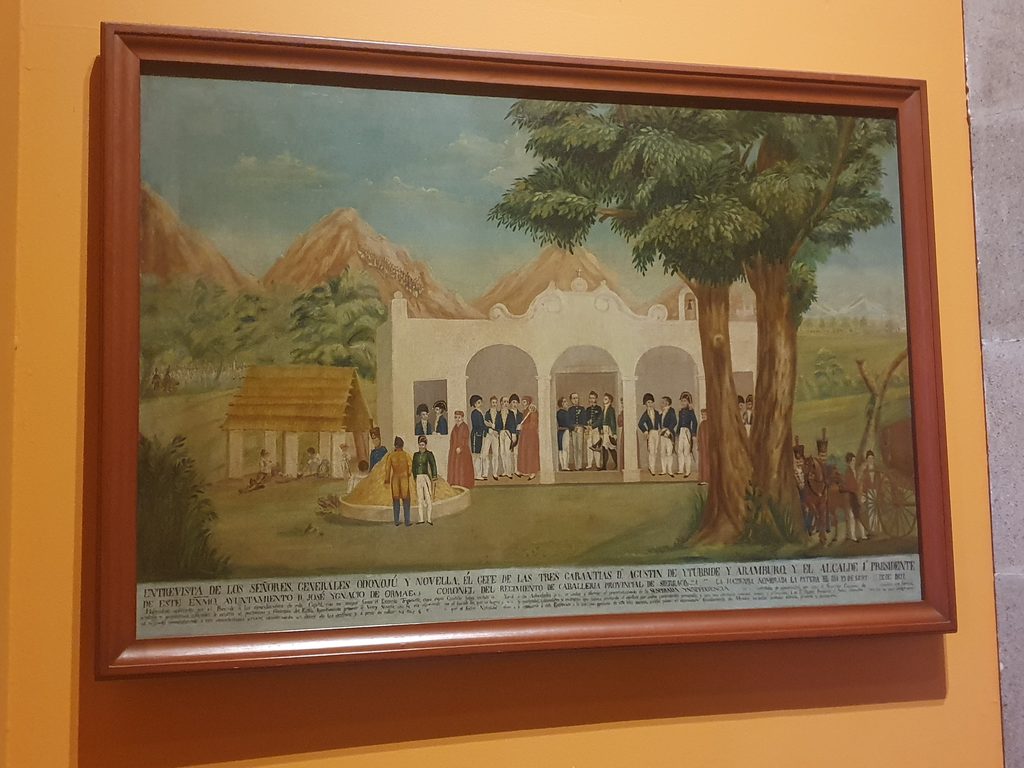
The Spanish government rejected the treaty. Without backup, however, O’Donojú likely felt he had no choice; and he was sure he had done the right thing, convinced that Mexico had the right ‘to declare its liberty’[3].
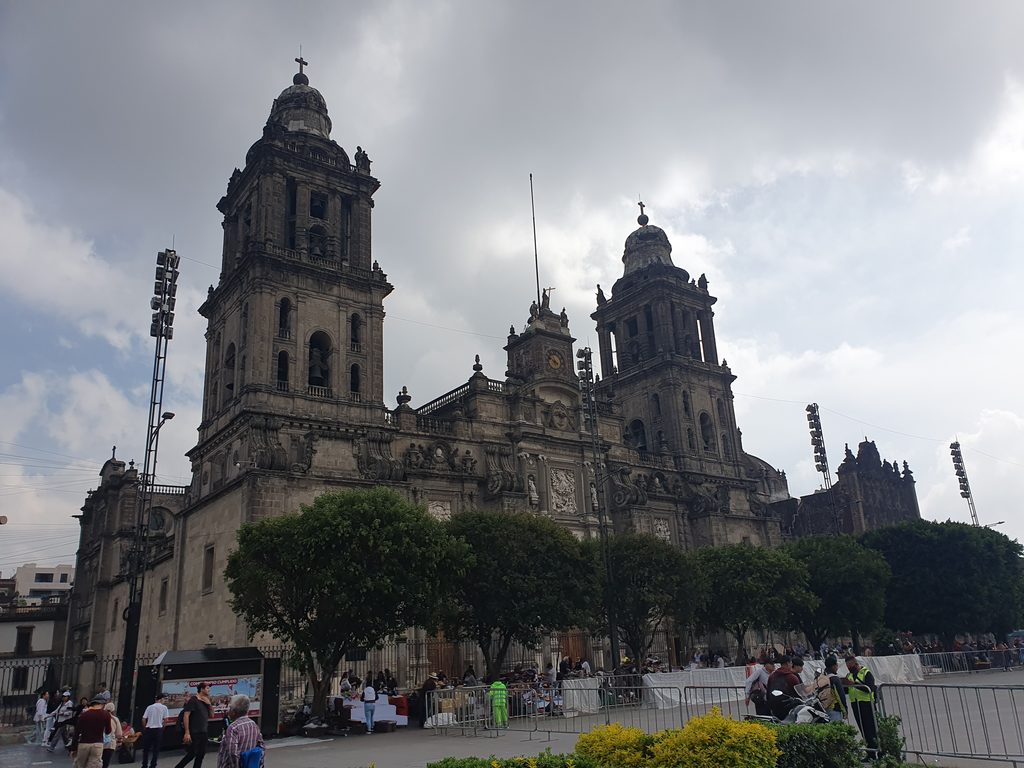
The ‘last viceroy of New Spain’ died early the following month. He had contracted pleurisy; rumours of a poisoning were never proved.
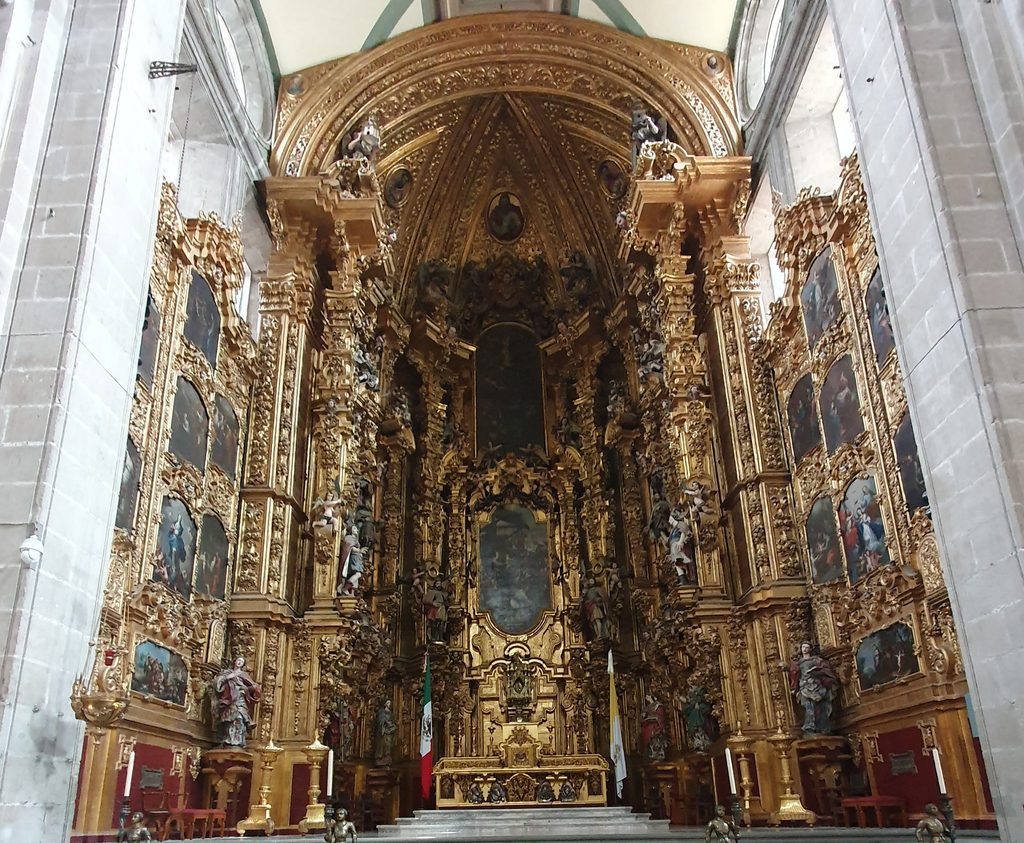
He was buried with viceregal honours in the city’s Metropolitan Cathedral.
The magnificent Altar de los Reyes (altar of the kings) in Mexico City’s Metropolitan Cathedral, beneath which Juan O’Donojú was buried in 1821.
[1] ‘his mission to’: Fanning, Paisanos. The Forgotten Irish who Changed the Face of Latin America, 176
[2] ‘the end of’: Meyer, Michael C; Palerm, Angel; Willey, Gordon R; Cline, Howard F; Bernstein, Marvin David; Parkes, Henry Bamford and Griffin, Ernst C, ‘Mexico’, Encyclopedia Britannica, 2 July 2025: www.britannica.com/place/Mexico. Accessed 2 July 2025.
[3] ‘to declare its’: Fanning, Paisanos. The Forgotten Irish who Changed the Face of Latin America, 177
2 Comments
Comments are closed.